Pinning Songs to Text!

Many writers dream of having their works made into movies.  Though movies rarely rival the actual book, it is still a huge honor if Hollywood takes on their creative project. After characters and settings have been chosen, there has to be the perfect music to set the tone for each scene.

I will never forget Roberta Flack singing ‘The First Time Ever I Saw Your Face’ in an old movie called Play Misty for Me.  Clint Eastwood was walking along with his girlfriend and that song along with the scenes of a waterfront will be forever etched in my mind.  It was such a moving piece for the innocence of the moment.

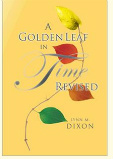
I recently pinned four songs to scenes from both of my novels, A Golden Leaf in Time Revised and Warm Intrigues on my blog. When I pinned Louis Armstrong’s version of ‘You Will Never Walk Alone’ to a scene from Golden Leaf, it made one of my commenters say that she needed to go back and re-read the book.

After we have written the books, trying to market them is whole other enchilada. We try to come up with new and innovative ways to draw attention to our labors of love.  In the new millennium, we know that colors and sound work and we are thankful for You Tube.   It allows us to find our favorite songs.

The other day, I was observing an 8th grade Language Arts class.  The teacher put the students in groups of four and gave them the lyrics to a song.  She chose songs that had common themes with the book that the class was reading.  Each group had to write their thoughts about the song on a large sheet and share it with the class. But when the teacher played the actual song on You Tube, the students lit up with excitement. It was a great way to end their school week.

I later told her that I had recently tried the same technique when I pinned songs to excerpts from my books.  She liked the fact that we were on the same page.  In one instance, I wanted to use Willie Nelson’s touching version of ‘You Were Always on My Mind.’  I discovered that Elvis had sung it first and his version was quite impressive.  I liked both, but stayed with Willie Nelson for my blog post.

Sometimes, writers are consulted when their works are being made into a movie.  Hollywood does take quite a few liberties with the authors’ works, but at least the story gets out there and reaches those who do not read. So, just in case Hollywood does come a-knocking, it would be a good idea to be prepared.

When the director or producer asks, “What song would you use for this scene?”  First, just pause and look as if you’re thinking. Then, lean over and go into your purse and take out this neatly folded sheet of paper (which has 50 songs on it). Calmly turn back around and say, “Well, let’s see.” And the conversation would begin as you pin those songs to those scenes!

Lynn                                January 26, 2015

Yea or Nay?

In Warm Intrigues, Phoenix has put her relationship  with Tyre on hold after receiving some disconcerting news.  She needs time to sort out things.  After some time has passed, she finally calls him.

Warm Intrigues -Cover

Excerpt from: Chapter 27  – In Pain

Thirteen days had passed since the sharing of the letter. Phoenix had cried and sighed. The things that used to work to make her life tolerable were not working for her. She was bored easily. The movies, books, wine, or the overachieving at work did not fill the void.

As one of her old friends used to say, “Once you have had the filet mignon, nobody wants dog food.” She used to laugh at her friend, but at this point in her life, the meaning was surreal. She thought that she could just walk away and just forget that she had met this man. But the flight plan was not working.

Wherever she went, she heard his voice. She felt his touch. She saw into his eyes, and she could see the dimple revealing itself at the most unexpected times. She could no longer sedate herself by drinking. Phoenix had driven home from her mother’s that Sunday morning, and all of Septima’s words of wisdom were playing in her mind like a tape recorder.

Her mother never told her what to do, but she helped her sort out her own thoughts. She allowed Phoenix to see herself in a transparent way and left her the room to make her own choices. Of course, this is what any good friend or mate can do.

“Okay. Okay. I will do it!” she said looking up at the sky. “I will call him after midnight.” She called him. He picked up.

“Hello, Phoenix-bird,” he said softly. “I saw your name on the caller ID.” Her heart skipped a beat upon hearing his voice.

“Tyre,” she paused, “I can’t take it anymore.”

“Okay, I understand. Well, keep the ring as a token of my love,” he said.

“No, no,” she said as she shook her head.

“No, you don’t want the ring?” he asked.

“No, I mean. Yes, I want the ring. I want you too. That is what I am

trying to say,” she bumbled.

He was very quiet. All she heard was his breathing.

“Tyre? Are you still there?” Phoenix asked.

“Yes,” he said.

Lynn                                                                                                    January 24, 2015

Breathe!

When the movie Waiting to Exhale came out, I remember this particular outspoken mother.   She was on a talk show with her daughters and she said, “My daughters better breathe now!”  They were discussing the movie which was originally a book written Terry McMillan.  It  basically dealt with women in challenging relationships.

In essence, she was saying that she did not want her girls to hold on to pent-up emotions and consequently make themselves sick.   They needed to exhale and breathe as they worked through whatever was happening in their lives.

 Sometimes, when we are traveling through challenges, we think that we are truly breathing.  But in actuality, we are taking short, light- leveled breaths.  Most spiritual gurus will tell us to take deep breaths.  With a deep breath, we feel a lift of the shoulders and a squeeze of the lungs.  A conscious deep breath gets that oxygen to the brain as we fill  our lungs with fresh air.

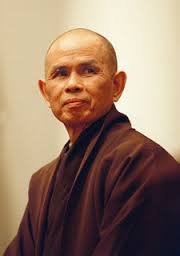
Thich Nhat Hanh writes that when we do conscious breathing, we get in touch with our gut-level feelings. If we pull out those feelings and honestly admit what is going on, we have a better chance of ultimately controlling  our emotions.

If something caused us pain, we should go ahead and say ‘ouch.’ We should let ourselves have a short time to sulk, cry, talk with a trusted friend, journal, walk or do whatever is necessary to get us to the next level.

We should take ownership for how we really feel about incidents and events and know that it is okay to feel that way.  Then, we  have a better chance of returning to a healthy state which allows us to take deep breaths as we heal.

According to the COPD Foundation website, deep breaths allow oxygen to flow in and carbon dioxide to go out.  We pull fresh air into our lungs and we let go  of the stale, trapped air.  Whenever, we see someone in crisis mode, the first thing a wiser person will say is, “Breathe!”  They do not want the person to have a panic attack or begin to hyperventilate.

When we take deep breaths, we breathe from our diaphragm.  The COPD website refers to it as abdominal or belly breathing.  When we are conscious of how we are breathing, we can take deep breaths to help us relax and calm down.

Physicians tell us to, “Take a deep breath,” during  examininations. It allows them to see what is going on inside of us on a physical level.  So, just think what a deep breath does for our emotional balance.

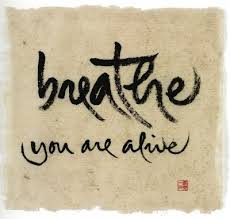
Thich Nhat Hanh wrote one book called, ‘Breathe.You are Alive!’  He said, “To be able to let go is already to have arrived at liberation.”  So, we must take deep, healthy breaths and know that it is going to be just fine.

Breathe you are aliveHanh

Lynn                                                                                                January 23, 2015

Breathing at Last!

Warm Intrigues: A Sequel

Warm Intrigues -Cover

In this excerpt, Phoenix and Tyre are eating at a Japanese restaurant. They are enjoying themselves as they get to know each other.

{From: Chapter 4 – The Call}

They both, again, chose salads to keep the promise of increased health. She chose fried rice and shrimp as her one side. He chose chicken and beef as his two sides and the chef heaved their helpings on to their plates after he cooked the food for the entire table. They talked as they watched the chef cook up the ingredients of the meals and somehow remembered exactly what each person had ordered. The servings were plentiful.

Phoenix and Tyre laughed and talked about light things such as the latest on their jobs, what they were reading, and whatever personal projects they were engaged in. She shared that she was reading a book by Susan Wiggs. She told him that she had to keep something truly adult around to have an outlet after reading so much young adult literature for the job.

Tyre shared that he also took delight in reading things that are not work-related. He subscribed to a few magazines for leisure reading. He also shared that he had recently started taking a course called Spanish for Educators.

“Was that required?” she asked.

“No. I just want to be able to communicate with all of my students, and the Spanish—speaking community is one of the fastest growing populations of the country, you know,” he said.

“Yes. Being bilingual makes you highly marketable,” she said.

As the conversation flourished, once again, time seemed to fly to both of them. At one point, Tyre excused himself as he went to the men’s room. Phoenix noticed that when he left, it was as if the air had left the room and her breathing became more constricted. She spent that time to take notice of the lovely Japanese art that hung on the walls to stay occupied while he was gone.

“Wow,” she thought. “What a strong presence! What an effect!”

When he returned and took his seat beside her, her breathing seemed to even out. She stared out in space and asked herself, “What is this?”

He inquired, “Phoenix, are you okay? You want to share that faraway place you just traveled to?”

“Nah. You wouldn’t understand,” she responded.

“Try me,” he said.

“I will.  At another time. In another location,” she said.

“Does that mean that I will get another chance to see you?” he asked.

“Affirmative,” she answered.

He beamed. That one dimple appeared as he paid for their meal.

“I like this man,” she thought. “Should I pinch myself?”

When they crossed the little bridge in the lobby of Hamada’s, he took her hand lightly and said, “Be careful.” This time, she did not let go of his hand. Their theatrical performance drew consenting smiles from the older couples that aligned the awaiting bench. One elderly gentleman said to Tyre, “Hold on to her.”

“I plan to,” he responded.

*Click on the arrow to hear Faith Hill’s song,  ‘Breathe.’  Phoenix and Tyre are finally able to relax and breathe a little easier after many hardships.

Lynn                                                                                       January 22, 2015

Phoenix’s Walk

In A Golden Leaf in Time Revised, Phoenix is fed up with the shabby treatment she has been receiving at her place of employment. She has requested assistance from the library administration and finds out that she is being transferred to another library branch.  She takes a walk to air out her feelings of disappointment.

Golden Leaf thumbnail

From:  Chapter 11 – Phoenix’s Imagination

Phoenix wanted to make a good impression and certainly did not want her guests to see what was really going on at the library. She boldly went into the library, and when she spoke, the two sitting at the desk said nothing. “Okay,” she said inaudibly. This along with the fact that Angel was in her parking spot let her know the tone of the day.

Phoenix went to her desk. She opened the book she had recently purchased called The Snow White Syndrome by Betsy Cohen. She stopped to read the following passage:

Envy is hostility, the withholding of friendship, hate stares, snubs, ridicule, cattiness, whispering, troublemaking, calumny, sulking, silence, acting injured, as if someone actually did something to hurt you. It’s uncalled-for temper tantrums, like slamming things down, walking very fast with heels banging on the floor (very common, like the woman who huffs and puffs . . .

It was so perfect for what she was experiencing, so she wrote it down verbatim and taped it to the leaflet on her desk. It seemed to be the right thing to do to express what she lived through on a daily basis. She also felt that it might help future staffs cope.

The library opened, and several of her favorite patrons came in to chat briefly. It was as if they could feel that something was happening. But then, she knew they knew. The community always knows. Shortly after those chats, a chief library administrator from the central office walked in, asked to speak with Phoenix, and informed her that she was being transferred immediately to another branch.

He said that she would be on a new six-month probationary period and told her where she would be reporting. It all happened so fast that Phoenix informed the head librarian that she wanted to take a walk around the community.

She left the library and started walking through the impoverished yet sainted neighborhood. She cried as she looked at the community children outside playing, who so sorely needed love and guidance. She walked on as the tears flowed, and instinctively, she ended up at one of the local elementary schools.

She headed toward the school library and the school librarian in the hallway. They had worked together in the past. She took one look at Phoenix and knew that a disaster had taken place.

The school librarian took Phoenix aside and kept reminding her that it was for the best. After Phoenix calmed down, she could hear the children singing from the music room. They were singing “You’ll Never Walk Alone.” It gave her the strength to leave the school and return to the library.

I chose this You-Tube video of Louis Armstrong singing “You’ll Never Walk Alone.”

           Lynn                                                                                                                     January 20, 2015

Service!

On this MLK day, we think of service.  Dr. King said, “Everybody can be great…because anybody can serve.” How can we be of service?  The President often speaks of being of service and so we pause and ask ourselves how we can be of service to others?

There is always a place that can use our ample hands, willing hearts and expertise in some area. There are so many ways to be of service. When we think of a loved one who is feeling under the weather, we can give them a cheery phone call.  We can talk about light and humorous things to help take their minds off of what is bothering them.  For a brief time, they can laugh and not think about their bodies or what ails them.

Speaking and acknowledging another person’s presence is a form of service.  We all know how a snub makes us feel; so a mere ‘hello’ costs us absolutely nothing.  Sharing a smile can light up someone’s day. We never know what feelings others may be harboring. This lets the other person know that they matter and this too is a form of service.

Helping an elderly person carry his or her groceries up some stairs is another form of service. Or, we could knock on an elderly neighbor’s door to see if they are okay and make sure that they have everything that they need.  We could clean the snow off of the elderly or ill neighbor’s car after cleaning off our own car.  We are outside anyway.  Or, if we are going to the grocery store, we could see if they need any basic necessities to make it until they go on their major shopping spree.

It is the small acts of kindness that truly equate service.  It may be something as simple as pulling up a little closer to the vehicle in front while parking on the street, to make sure the driver behind can get out with a level of ease.  We could offer to watch a neighbor’s toddler, while he or she cleans the snow off of the vehicle.  Simply holding the door for the person that is behind us is a form of service.  We all have a peripheral vision and can usually see, hear or sense when someone is in close proximity.

Giving someone an encouraging word is a gem that is rarely forgotten.  People remember the small kindnesses. Though others may appear to be handling their personal affairs, an extra dose of kindled love never hurts.  Their spirits may be high, but a good word can bounce those feelings even higher.  We all need to be assured from time to time that things will in fact ‘be okay.’

“It is the service we are not obliged to give that people value most.” James Cash Penney

Lynn                                                                                                     January 19, 2015

Looking Back!

The other day, I was looking for blog topic ideas.  I visited Molly Greene’s website and she had a post called 101 Fabulous Blog Topic Ideas.  She suggested that we add a song playlist for parts or all of a book.  I thought I would try it for one ongoing emotion.  Trey looks back with regret.

In my novella, A Golden Leaf in Time Revised, Trey is involved in a stressful relationship with Flora. She is an insecure woman who constantly accuses him of being with other women.  From the looks of things, he will be  with her for a while because she is now with child.

Golden Leaf thumbnail

The present moment is too excruciating so Trey reminisces about his former girlfriend.  She is the one who got away.  Here are two excerpts where he is reflecting on what they had when he they were together.  I chose Willie Nelson’s song, You Were Always on My Mind to play as Trey is looking back.  If this was a movie, this song would be perfect for these two scenes:

From:  Chapter 12- Trey’s Imagination

“ She (Flora) was far from his college girlfriend who challenged him on many levels—she let it be known that she was neither his servant nor cook, and they usually ate out, played chess or Scrabble, and there was a lot of mental sparing. “Again, taking folks for granted,” he heard himself say. Now he really missed her.

“Trey,” he heard the voice from the other room, “Are you on the phone?” 

“No, Flora,” he said flatly. “But I heard you say something,” she continued. 

From:  Chapter 16- Trey’s Will

“A huge tractor-trailer blew at him, and he swerved back into his lane, realizing that he needed to focus on driving and on his own grim situation with Flora. But the present seemed too difficult to face, so he reflected on the days with his former girlfriend for a while. He had let her slip away and had heard that she had married well to a stand-up guy. She had called him before her wedding and expressed her condolences in regard to his mother.

She also told him that she’d always have a special place in her heart for him. She said that she realized that their lives had to take different paths and that she asked for his blessings for her upcoming marriage. During the conversation, he basically listened and said little. Afterward, he went to what was then a local pub and drank too much. He later heard through the grapevine that she was doing fine and had given birth to a beautiful little girl.  

*Click here and enjoy Willie Nelson as he pines for someone he once knew.

Lynn                                                                                                                            January 18, 2015

To Cheryl: Remnants of a Dreamcatcher!

This blog is dedicated to my oldest sister, Cheryl who recently passed. I am certain that she is with my parents and other loved ones who have gone on. I gathered a few items that she had given me from around the house and then took the picture below.

I could feel her close by as I wrote. I keep seeing her smiling. How comforting! She is happy and out of pain. She looks like her old self again. She was beautiful and quite a looker!

She was a true big sister who lined up her three younger sisters when we went to a new school. She’d say, “You see these three. If you bother them then, you have bothered me.” She probably had her hand on her hip with a sassy attitude! Anyone would think twice.

She was a seamstress. She designed without a pattern. I remember a cranberry wool jacket that she had made and given to me. It had large drop sleeves and was lined with a rich black satin. Whenever I wore the coat, people wanted to know where I got it and how they could get one. “Will she make me one?” was the most prevalent question.

She was a limo driver. Once, Annie Lee, a famous African-American painter, who also recently passed, saw her in the limo line-up in California. Annie Lee exclaimed, “There is an African-American woman driving that limo! I need to paint that!” She told Cheryl how she had reacted and vowed to paint it. I don’t know if she ever did, but she was surely impressed by my sister’s courage as she drove a stretch.

I rode in it with her on a couple of occasions. She went to pick up a businessman and we crossed the Golden Gate Bridge together. I remember her telling me to be very quiet as she maneuvered the limousine across the suspension bridge.  During another event, she picked up a birthday girl and her friends and I waited with her until they were ready for their pickup to go home.

I always traveled to wherever she was living. So through her, I saw Los Angeles, when her daughter was born. I saw San Francisco and Oakland a couple of times and sat on Lake Merritt while visiting her. And, I finally made it to Florida twice and I visited her in Tampa and West Palm Beach.  I remember us eating and walking as we browsed at an art fair in Boynton Beach.

We saw both the Pacific Ocean and Atlantic Ocean together. I remember seeing the seals gathered on the rocks on the Pacific in California and I saw a scenic ocean liner on the horizon as we faced the Atlantic Ocean in Florida.

So, the picture here represents remnants of her favorite things. The black taffeta was purchased from Fishman’s, one of Chicago’s high-end fabric stores. She spent many days and hours in fabric stores looking in pattern books and making selections of material.

The navy blue bracelet is a gift for one of my birthdays. She made the African headband to the left and designed the colorful tam to the right. All of the sisters have one and we call them our crowns. And then there is the huge dreamcatcher that she sent me in hopes of it capturing those bad dreams.

This is only a small peek as I begin to reflect on Cheryl and how she touched my life. We had a special bond. We could talk. She knew how to listen and respond in a way that let me know that she had heard me. That is a gift in itself. Many hear but few really listen.

I will miss her but I know that she is at peace and if I am really quiet, I know that I can hear her whispering words of encouragement as I carry on stronger for having known her.

007

Lynn                                                                                                                                 January 16, 2015

Painting: A Creative Outlet!

I find great comfort in painting. I am not a professional painter by any means, but I see the aesthetic beauty in artwork and I appreciate nice art pieces that appeal to me. Often those of us with a creative spirit can do a variety of things such as write, sketch, paint, create poems or play a musical instrument. We see colors whether in words, in melodies or on a piece of canvas.

Plutarch says, “Painting is silent poetry, and poetry is painting that speaks.”

We paint pictures on a blank page through word play when we write a poem or create a story. We paint pictures when we play a musical instrument. When reading to the children, I sometimes added a little music to story time by playing on a wooden flute or harmonica at intervals. The children’s eyes would light up and widen when they heard the sounds which further painted the story in their minds.

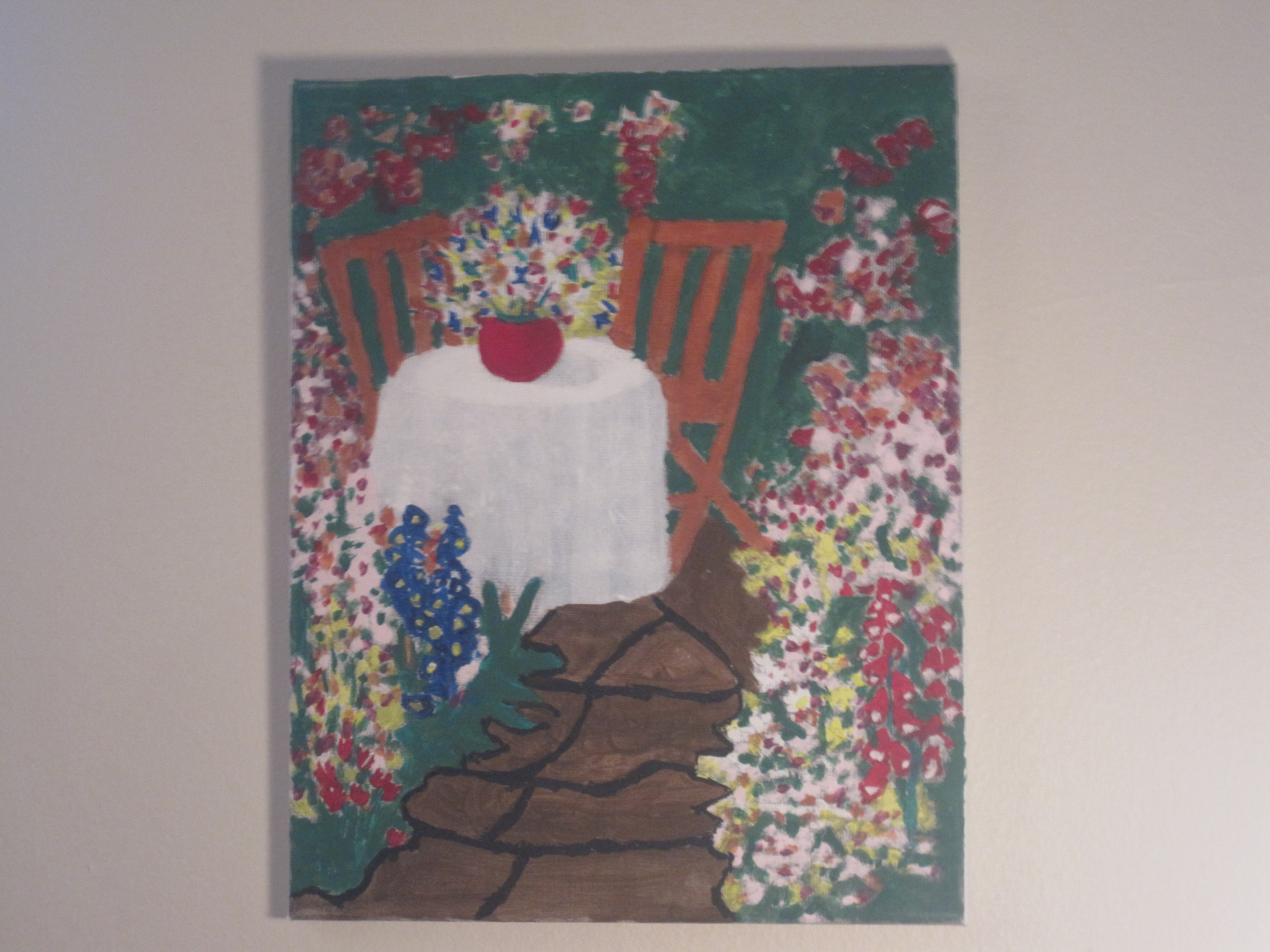
But speaking of truly painting itself, I have painted some rather intricate paint-by number sets. I know. It is cheating, but some of them actually turn out quite nicely. I have put poems on canvas using calligraphy and added a design. And, I have sketched pictures on a piece of canvas and then painted them. They are my keepsakes and they represent stages of my life because I always date my work. Pablo Picasso writes, “Painting is just another way of keeping a diary.”

I will look at a picture and try to replicate it, which works better for an amateur artist. And, once I have decided on an image to sketch, I do so. When I am ready to paint, , I pull out my paints and brushes and try to cover the area for protection of the furniture. I set everything up and I am ready to start.

The actual painting of the picture can be a comforting venture when there has been too much reading or writing.  Edward Hopper writes, “If you could say it in words, there would be no reason to paint.” So when there has been enough interaction with the printed word, painting is a pastime that can be stretched out over time. It is calming and soothing as I change the colors that I need. Just dipping the paint brush into the water cup to rinse off colors is a slow thoughtful process which adds to the feeling of peace.

“Painting is the silence of thought and the music of sight,” according to Orhan Pamuk, My Name is Red

A large variety of colors helps because it gives me more choices and there is the opportunity to mix colors for different effects. Also, having a large array of paint brushes of different sizes allows me to make more intricate designs. Painting is one of many ways of continually flowing forward. “I believe, I believe every day is a good day when you paint,” says Bob Ross. It is a great creative outlet!

January 7th 048

Lynn                                                                                                     January 14, 2015

Introducing British Author Carol Hedges!

I would like to thank Carol Hedges for agreeing to do this interview about her book Jigsaw Pieces which I thoroughly enjoyed.  I had so many questions about this serious and thought-provoking work. Here is how she answered my ten questions.

Carol HedgesJigsaw Pieces

1.  What inspired the use of the poem ‘Trench Winter” by Noel Clark?

As I was writing Jigsaw Pieces, I was also teaching World War One poetry to a Year 11 class. The poems and the stories behind some of the soldier poets were so harrowing and so evocative of a time long gone by, that I decided to incorporate the story of an imaginary poet Noel Clark, into the narrative. He is a composite of all the poets and lives so tragically cut short. I wrote his poems together with a very clever Year 11 pupil…. and yes, there are many people who think he is real, but he isn’t.

2.  We know that the soldiers of WWI had to deal with the trenches. Hemingway gave me some insight into what they endured by using trenches. How would you describe the ‘trench experience’? What did your research reveal to you?

It is interesting how war throws up poets. Horrors that we cannot imagine seem to crystalise in men’s minds into poems .I decided, after reading all the well-documented accounts this is because it was their attempt to ‘control’ through words, the uncontrollable and terrible slaughter and randomness of life all around them. Poetry is a way of ordering disorder. There were lots of poets then, including hundreds of female poets, whose work is largely unknown. They never fought at the Front, but they shared in the suffering and the changed lives.

3.  Annie is teased and called Viking. Why do you think that young people are cruel to outsiders or people new to a group or situation?

It isn’t just young people who are cruel to ‘outsiders’ alas. I think it comes from fear of the unknown though the effects can be devastating on the victim. I have blogged elsewhere how I was subject to teasing, bullying and ridicule when I was a teenager, as I found myself the only Jewish pupil in a girls’ school of over 800 Gentiles. It was easy for me to put myself in Annie’s shoes, and recall those times; if you have ever been bullied, the memories never leave. Even at 64, I can still see the faces of my tormentors!

4.  Do you think that Annie’s assignment to the retirement home was a good strategy? What do you think that the headmaster hoped to teach her?

I think it was the best thing that happened to her at that time even though she didn’t see it of course! I’m not sure if it was ‘planned’ or just one of those random events that happen, but in hindsight, play such an important part in our lives. Maybe the Year Head wanted to break open her hard shell, and make her see that other people’s lives impacted, even if they were what society would consider ”over.” I certainly wanted the reader to consider what wisdoms and stories lie inside people at the end of their lives, and how important it is to hear them. Annie’s life was immeasurably enriched by her time at the old people’s home and I think it gave her a depth of compassion and understanding. Also, old people are far more accepting; ironically, it was where she felt most at home!

5.  Is Billy’s mute condition symbolic? Why or why not?

Billy was based on a real life man, whom I read about in The Times. His story replicates exactly that soldier (now dead). Elective mutism is a known medical condition, often seen in children as a reaction to events they do not want to face. In Billy’s case, clearly it was a reaction to the horrors he experienced in the trenches. So many men who returned had no vocabulary to describe what they had seen or undergone. The contrast between their former lives and the maelstrom the entered was too vast to encompass words. However, as the poets sought to encapsulate their thoughts and feelings in the concentrated form of verse. Many others were war artists, putting down visually what they could not put into words. In Billy’s case, it was that one particular event, and of course, Annie subsequently found his diary and realised what it was he had chosen not to talk about.

6.  What does Annie learn about life after delving into the cause of Grant’s death and putting her own life in danger?

I think Annie learns about herself. She finds depths of courage, and of resilience. She also realises that the world is not the safe place she thought it was, and that ‘adults’ are not the safe authority figures they set themselves up to be. Annie is very opinionated, and Grant’s death challenged the way she stereotyped people, or pre-judged them. I think she also learned that, like the WW1 soldiers, you cannot ‘control’ everything. She had to let events unravel and be part of the unravelling rather than the instigator.

7.  How can Grant’s suicide note help our youth avoid those types of traps?

The story was written at a time when technology wasn’t so advanced as now. The letter was, however, a montage of letters I read on a suicide website. I wish I knew how to stop teens from taking their own lives. If the letter can show them that others feel the same pain, and that a decision to end their lives leaves so many loved ones suffering and hurting and asking why? Then, maybe it will do some good. There are even more pressures on today’s teens. I extend to them a massive hug, and say: each of you is valued and loved and important. The world would be a poorer place without you in it.

8.  What does Annie learn from reading Billy Donne’s entry from his journal?

Annie learns from reading the journal that Billy was once like her: someone with hopes and dreams, and principles. She sees how courageous he was, how he tried through his writing to take a stand for what he considered right. She also saw how someone less resilient, Noel Clark, couldn’t cope under similar circumstances, and chose a different route. Annie has always scorned people who weren’t ”strong.” I think she learned that there are different kinds of strength, some of which may appear as ‘weakness.’ An outsider does not understand the internal torment of another person.

9.   What helps Annie move forward and advance to the next step in her life? How did you choose the title for your book? Did you know from onset that it would be called Jigsaw Pieces?

Annie can move forward in her life only when she understands about other people’s pain, and admits that she too is vulnerable. These are the qualities that make us fully human. Once she has acknowledged them, both in those around her and in herself, she is ready to go search for her father and find ‘the piece of the jigsaw with my face on it’. The book was originally published in paperback form as Jigsaw. I rechristened it as Jigsaw Pieces when I got my rights back from the original publisher and republished it as an e-book. It started out as ‘Soldier, Soldier’ – with the idea of the real WW1 soldiers, and Annie as a modern-day ‘soldier’ battling prejudice. I changed the title as it made better sense and would be better understood. Books frequently go through several changes of title with me. It’s rare that I come up with the final one at once.

10.   Have you written a discussion guide for this book?

I’ve never been asked to write a discussion guide; however I think if I did, most of the questions you’ve asked me here would form the basis of it. I’ve really enjoyed thinking about the issues raised, and delving into the thought processes that went into the writing of Jigsaw Pieces. Thank you for posing such searching questions!

Note:

Carol Hedges is a British author of books for children, young adults and adults. Her novel Jigsaw, about a teenager’s suicide, was shortlisted for the Angus Book Award and nominated for the Carnegie Medal in 2001.  Her most recent works are the Spy Girl series for teenagers and the Diamonds & Dust series, published by Crooked Cat and featuring the Victorian detectives Leo Stride and Jack Cully  These books are written for adults.

She lives in Hertfordshire and is married with a grown-up daughter.

Links

Twitter: @carolJhedges

Blog: http://carolhedges.blogspot.co.uk

Amazon author page:  http://   ow.ly/oZcIh

Lynn                                                                                                                          January 12, 2015