Blog Versatility

Blog ver

Our blogs allow us to show our versatility. Though we may be fiction writers, our blogs allow us to venture into other territories that we would not normally write about while working on a new novel. Here, I have conducted a few interviews with some Twitter writers about their works, posted some recent poems and used my blog for overall reflections or book analyses.

The writing process is so varied and we never know when we may have posted something that will inspire a new writer or open up the streams of a blocked writer. So, though there is no method to the madness, blogging is our chance to be a bit all over the place and even showcase our multiple wares.

The bottom line is to keep the fingers moving and keep writing as often as possible. When writing is done on a daily basis, it makes it easier to write when that next story idea rolls across our minds. Then, we will not hesitate to get those ideas down before they evaporate into thin air as dreams often do.

7-10-14
Lynn

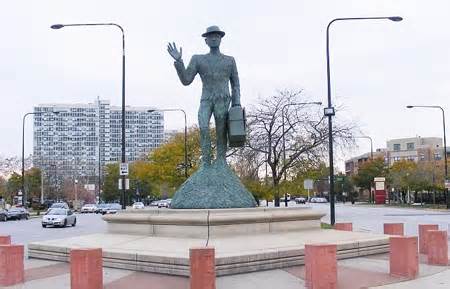
When I Think of Bronzeville

th[1] (2)

Traveling south of McCormick Place, you will see,
The huge statue of The Migrant and you will be,
Entering Chicago’s large, historic Bronzeville.
Full by those who came to close the deal.

It houses the people of color, who came,
To the North in search of the very same,
Rights that were denied them in the South.
They came to put food in the babe’s mouth.

Martin Luther King Drive runs down the center,
He bravely acted as the people of color’s mentor.
Years before known as South Parkway Street
Then filled with jitneys, to help those with tired feet.

Bronzeville- a place of warmth and happy smiles.
From those who traveled, oh so many miles.
Good cooking, soul food on that plate.
After working menial jobs, often very late.

Music, jazz, R & B and soul in a loud beat,
Skating, dancing, beaching in the heat.
Giving a backdrop of life in constant motion.
Yet, church on Sunday for regular devotion.

Yes. The symbolic Migrant stands tall.
Shoulders held high; answering the call.
Suitcase in hand, hopes all abound.
Oh, Bronzeville! Bronzeville! Love that sound!

9-5-13

Lynn

Tell it to the Gatekeeper Angel

angel

When you arrive at heaven’s gate,
Can you present a decent slate?

Can you show all you did to just help?
Or will you cry out loud and yelp?

When asked to present your personal case,
Will it be adorned with beauty and lace?

Or will you hang your head in defeated shame?
And look around to find others to blame?

Be ready for that great inevitable day,
Make sure you have many positive things to say.

4-24-14

Lynn


Rites of Passage-Using Rituals

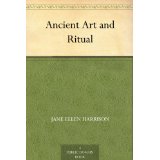
In Ancient Art and Ritual, as referred by Twitter writer Mark Schroeder, Harrison writes that rites and rituals strengthen man emotionally and connect him to the ‘Giver of all things.”  He knows that he needs to ‘utter’ thanks and show gratitude to show reverence and hope that his needs will continually be met.

In A Golden Leaf in Time Revised, Phoenix makes use of her symbolic name by practicing rituals and ceremonies as she hopes to become renewed daily like the Phoenix bird.  She is often heard saying that she has ‘’turned over a new leaf” as she proceeds on her new path of self-discovery.

Dances and rituals have been used to help various groups of people as they try to reach some new plateau or celebrate some good occurrence.  These rituals or pleas for mercy are often highly charged in emotion as they attempt to make contact with the gods.

Phoenix practices one ritual where she stands and raises her hands in the air and proclaims, “Out of ashes, peace will rise.” She learned this after listening to a speaker who had the audience stand and do this in all four directions. This is her way of connecting to her Higher Source as she waits for her rite of passage to higher ground and happier conditions.

art ritual

 Lynn                                                                                      July 3, 2014


Does Your Writing Evoke Emotions?

“At the bottom of art, its motive power and mainstay….is to utter, to give out a strongly felt emotion or desire….” Ancient Art and Ritual – Jane Ellen Harrison

Mark Schroeder, a Twitter follower, recommended this book to me and as I read, underline and highlight the text, I can better see what I am attempting to accomplish as a literary artist.  As writers, we have definite thoughts in mind as we write.  We care about our characters and we hope we can evoke those same emotions in our readers.

In of A Golden Leaf in Time Revised, neither Phoenix nor Trey have found the peace that they deserve; yet they are both good people who are trying to excel on their jobs.  But, their love lives are in tatters and almost cost them their livelihoods or income; hence, the ability to take care of themselves as single professionals.

Also, from the same book, Ancient Art and Ritual, this line touched me because it states what I was attempting to show. “Instead of asking a god to do what he wants done, he does it or tries to do it himself; instead of prayers he utters spells.” Both of the main characters, Phoenix and Trey, realize that they are powerless in attempting to solve their problems without adding regular prayers into their daily lives.  They see that they cannot dispel the dark forces without the aid of a Higher Power.

So, my task as a writer, in this instance, was to evoke compassion for these two characters as they try to reach a more comfortable state.  After my first author party, I looked at the pictures of some of the listeners and noted the seriousness on their faces, as I read from Golden Leaf. I could see that they were touched by the characters’ experiences and collectively agreed that this was no laughing matter. My task as a literary artist was accomplished during this particular gathering.

How do you know when you have touched the desired emotions of your audience?

art ritual

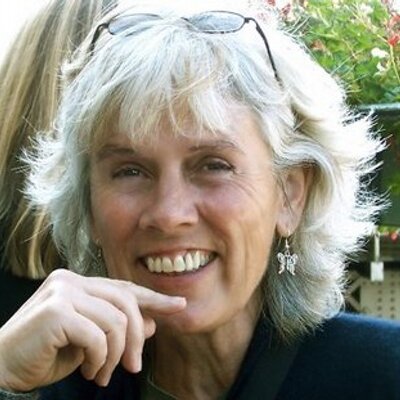
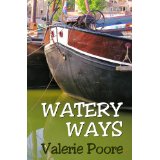
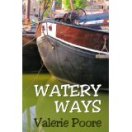
Watery Ways- Chatting with Author Val Poore

Val

See Val’s comparison of our lifestyles: http://wateryways.blogspot.com/2014/06/weberview-week-first-up-lynn-m-dixon.html?spref=tw
Dear Lynn,

Below are the answers to your questions. I really appreciate this opportunity and I hope I’ve given you and your blog readers a few more insights into my boaty world!

1.  Is living on a houseboat more economical than living on land in the Netherlands?

This is an interesting question because there’s not really a standard answer to it. Let me say first of all that living on the water is quite customary in the Netherlands. ‘Houseboats’ range from what are called ‘woonarks’ which are like chalets floating on concrete platforms, through old barges that have modern built superstructures and finishing with historic barges like the Hoop and the Vereeniging that I live on. The ‘woonarks’ are not cheap at all and are often more expensive than a normal house or apartment. Add to that the rent for the mooring or ‘ligplaats’ and the high maintenance costs and these are absolutely not more economical.

However, living on what we call a ‘vaarklaar‘ boat, meaning that it’s motorised and can sail, is quite economical. They tend to be cheaper than a ‘woonark’ (although some are very expensive). That said, mooring is always a big cost and that is where the historic boats are better off. There are several historic harbours in the Netherlands and they are nearly all run by sort of heritage foundations, so we have cheaper mooring fees. The condition for that, though, is that we maintain our boats as historic monuments. Apart from this, living on board is no more or less than living in a house, but it’s much harder work!

2.  Coincidentally, I have a character named Tyre in my book Warm Intrigues.  I saw that you used the word in Watery Ways.  What is a tyre in the boating vocabulary? 

I don’t remember using this word other than as a fender. We often use old car tyres as protection between the boats when mooring up. Inevitably, the water movement means you cannot always avoid bumping into each other, so old rubber tyres have a second life serving as cheap, but rather heavy fenders.

Lynn:  Oh, in the States we spell car tires differently.

3.  When the challenges of managing a houseboat alone became great, did you ever seriously consider looking for an apartment?  Could you share a time, if applicable?

No, I never considered it because I’d made a choice and I was determined to stick to it (I am a real Taurean bull – stubborn is my middle name). What appeals to me about living on a boat is that if you want to move, you take your house with you. Now I haven’t moved away from the harbour, but I’ve lived in many different parts of it, and that’s lovely. A change of scene without moving anything inside. The other great aspect is when you go on holiday or on trips, you always have your own things with you, so no, I didn’t consider it as this was and is the life I want. That said, I’ve had to spend a spell in an apartment recently due to family circumstances, and I’m very, very happy to be going back to my barge!

4.   How important is the boating community to your survival?

The boating community is not so much important to our survival, but it is important to our sense of belonging and being with other like-minded people. We have our harbour in the middle of a large, cosmopolitan city, but it’s more like a village. We all know each other; we all help each other; and if we are ever stuck or have a problem, such as hooligans throwing a gangplank in the water (which they do for fun now and then), there’s always someone to help. So, survival? No, not really, but for warmth, kindness and generosity of spirit, they are a very important part of our, and my, life.

5.   What is one of the most precious things you gave up to the “water gods?” I’ll leave this one as I can’t really remember anything precious, but a lot of stuff has been offered up.

6.  Are the festivals a time to showcase your skills, crafts and the boat itself? Please tell us why they are so important to the boating community.

I’ve written quite a bit about the festivals and what they mean to the community in Harbour Ways, the sequel to Watery Ways, but yes, in brief, they give us a chance to put up information boards and other displays and to put on demonstrations of the traditional boating crafts like riveting, sail making, rope plaiting and all that kind of thing.

7.   When the Hoop was put up for sale and you purchased the Vereeniging, was there a feeling of relief or a sense of added responsibility as you went from renter to owner?

There was a sense of panic! I had to move rather faster than I really wanted, so when I started living on the Vereeniging, my lifestyle was even more basic than it had been on the Hoop. The story of how I turn my empty hull into a home is actually the subject of the sequel, Harbour Ways, but in truth, I didn’t have the time to worry about the responsibility; I had to get on with the business of building somewhere to live and undertake activities like plumbing and furniture making – skills I had to learn because (being a stubborn bull) I didn’t want to wait till someone had the time to help me!

Thank you so very much for your kind interest. It’s really lovely of you! And now I’d better get back to that Research Proposal 🙂

Best of the best!  watery (1)
Val

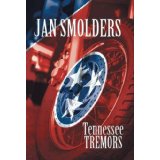
Talking about Tennessee Tremors- Jan Smolders

Thanks to Jan Smolders for agreeing to do this interview on his book Tennessee Tremors.  I lived in Tennessee for many years  and I have visited Dyersburg!  The landscape came back to mind as I read this captivating mystery!                Lynn

jan smolders

1.  The Tennessee Tremors title seems to be doubly symbolic.  Why did you choose that title?

Earthquakes, mostly small ones, are a regular occurrence in NW Tennessee (as you know.) Of course a big one may happen (such as the one that crated Reelfoot Lake) and that possibility was an important scientific factor I had to take into account when I led the construction of a very big plant in Dyersburg in 1987. So, earthquakes were always on my mind, as a threat to our huge investment.

Personally, having lived and worked in Japan from 1970 to 1974 –to start up … a plant! … I was used to feeling a 4 or 5 on the Richter scale every two weeks or so.

As you hint in your question, I used the tremors as symbols for events and feelings. I believe you feel the effect of events and emotional experiences, such as love, as much as a … tremor!

2.  Do you believe that people need love in their lives to cope with difficult circumstances?

Yes. If love is there, one can accomplish almost everything, because motivation and sources of support are always there. No love, no life. I mean love in the broad sense: family, friends, nature, the … universe! If we love all we will make the right decisions and feel accompanied by our support network to implement them.

3.   Are you a reader of Shakespeare?  I see that you uniquely listed your characters and also had them thinking aside to share their inner thoughts which were two of his techniques.

I am not much of a Shakespeare reader, having grown up speaking Flemish (Dutch,) and  for the last 15 years I have spent all my reading time on the South American literature: Garcia Marquez, Allende, Vargas Llosa, etc. I worked in Spanish for much of these years.

I listed characters to help the reader with the “multitude” of players in the book.

My use of the “thinking aside” is a personal preference. I believe it moves the story faster and more smoothly. It’s a more lively way to express thoughts.

4.  You keep the reader hanging on the last page to see if Troy is okay.  How were you able to keep us guessing?

Well … I just kept reminding myself that keeping the reader guessing was my mission! I dropped a few hints about the real facts and quickly kind of minimized their importance. And I tried to raise grave suspicions about bad actors.

I was actually happily surprised that for so many the denouement came as a real surprise.

5.  Do you write in longhand or on a computer?

Computer. For the last 20 years I have lived with computer and BlackBerry, in areas as far away as Papua New Guinea or the high mountains of the Chilean Andes-mining country- my job for a while.

6.  What did you want readers to basically get from this story from Dyersburg, Tennessee?

The reason I wrote Tennessee Tremors is my concern for the environment.  In my corporate life, as a chemical engineer and manager, I have worked with poisonous cyanides, dangerous acids, ammonia, lead, excessive noise etc. I know how laws (if any) have been circumvented and how some industrial companies have made life miserable for citizens. I’ve seen it firsthand.

The danger usually shows up in food, water, air. Sometimes it remains hidden, for a long time, in the soil. And from there it enters the food chain. I wanted, in my small way, to make people aware of those facts, and of the lack of concern that still permeates much of the industrial world. ‘Profits first’- rules the world.

I write thrillers because I want to deliver messages without preaching. I’ve tried to do that in all my thrillers and make readers conscious of situations many in the regular world have no idea about. I want to make them aware, my way.

Again, thanks Jan Smolders!                                                 TN Tremors

Lynn

An Encouraging Word

Lately, I‘ve been inspired to tweet out some encouraging words to those on Twitter. As we wake up to daily mishaps such as school and public shootings, horrific natural disasters and mayhem of all types, I believe we all need to have something to cling to, to steady us.

We need to feel as though there is hope.  And sometimes, we need to feel that there is hope for us in our personal lives. So, I have been tweeting out inspirational lines on a daily basis as they come to me.  Sometimes, I borrow lines from poems that have sustained me over the years.

In the midst of the madness, it is easier to point the finger at others and blame rather than take responsibility for our own situations.  So today, I will restate a few favorite lines from Kipling’s poem, If.

“If you can keep your head when all about you Are losing theirs and blaming it on you……..”

“Or watch the things you gave your life to, broken, And stoop and build’em up with worn-out tools;”

“And so hold on when there is nothing in you Except the Will which says to them: “Hold on!”

“Yours is the Earth and everything that’s in it, And—which is more—you’ll be a Man, my son!’”

In my case, the last line will read, “And—which is more— you’ll be a Woman, my daughter!”

Lynn


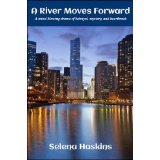
Featuring Selena


Selena
I recently read Selena Haskin’s book called A River Moves Forward. It is set in Chicago and when we corresponded, she said that she had never been to Chicago.

She researched it and I had vicarious experiences as I traveled through her characters’ stories in the this novel.  She agreed to do the following interview. I currently live in Chicago and it brought back a lot of memories for me in both place and song.

Here goes:

Q. 1. How did you research the Chicago landscape since you have never been there?

I work with a group of Historians and Curators full-time, so I have lots of books and online databases at my disposal. I have also interviewed several people who are from Chicago between the ages of 40-60.

Q. 2. What helps you visualize your characters as you get into their personalities?

Selena: Once I have an idea in my mind of what they may look like. I search online images and try to find pictures that closely fit what they may look like, and I saved them into a folder. This also helps me to describe them better.

Q. 3. Why did you choose to write about life in the housing projects?

Selena: I wanted to show people that no matter where you live we are all humans who face the same problems everyday. I also wanted to show that just because someone is financially poor doesn’t mean they lack morals or intelligence. In fact, many of my friends growing up were from the projects and they were some of the brightest students in the class. Lastly, I wanted to show that if you’re a person living in a low-income environment with high crime, it doesn’t mean you’re hopeless or helpless. My main character was able to rise above her circumstances.

Q. 4. Do you write in longhand or on a computer?

Computer. I used to write both ways, but that was too much work. LOL.

Q.  5. How do you get into the mood or zone as you put words on the page?

I write whenever the mood captures me or if an idea comes to my head.

River

Thanks Selena,
Lynn


Chris Hill-Interview

Chris hll

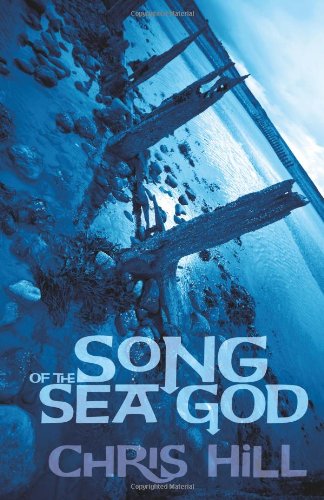
Here is an interview I did with author Chris Hill on Song of the Sea God.  He lives in the UK and I sent him these five questions because I was curious about his characters.  I felt it would make a good college discussion because there are so many surprising twists. Here is how he replied:


1. Who does John Love represent to you?

Firstly, thank you Lynn for having me along here to your blog, it’s a real pleasure to be here.

Just to put it in context, for people who have not read the book, Song of the Sea God tells the story of a man who comes to a small island off the coast of England and tries to convince the local people he is a god. It’s a story about the nature of religion and what it means to people.

John Love is my ‘god’ character and I suppose an interesting thing is that when I was writing the book I was concerned more with what he might represent to the reader than what he represented to me. One of the main things I wanted to do was to make sure there was a lack of certainty surrounding him on a number of levels. It’s hard to pin down what his motivations are – beyond the basic premise that he wants to become a god. Is he evil? Does he somehow believe he is helping people and acting in a good way? And beyond that I wanted there to be a grey area surrounding his very nature – is he just a con-man, a magician, a charlatan? Or is there something more to him – something supernatural? Even if you begin by believing one thing about him your opinion is likely to waver and shift during the course of the book. It was crucial for me that people be allowed to make up their own minds on these questions – perhaps because belief is such a core part of all religion.

2. What made you tell this story?

I’m not sure to be honest, Lynn! I suppose it developed over time and evolved from me wanting to think and talk a little about religion and what it means to people. I’m not particularly religious myself – I suppose I would describe myself as an agnostic, but saying I don’t know the answer to the mysteries of the universe is definitely not the same as saying there are no mysteries. I wanted to talk about that god-shaped hole people find in their lives and how it can be filled, for good and bad.

3. What were you trying to show when Walter & Grazier were mobbed?

When I was writing the book I did quite a lot of reading around faiths and beliefs – particularly ancient ones – pagan religions and so on. It seemed clear to me that, however high-minded their initial set of beliefs were, however much talk of love and positivity, that, somewhere down the line, there was a very dark side too. So often, hand in hand with all the good stuff, came the sacrifices, the martyrs, the holy warriors. It seems as though you can’t deal with these very powerful feelings and forces without there being destruction of some kind as well.

What Walter and Glazier share is that they are both outsiders in some way. Walter because of his physical and mental health conditions and Glazier because he’s the only black person on the island.

Both of these deaths are very shocking I think, not only because of their brutal nature but because of something else they share, which is that they are manifestly unfair and unjust. In Walter’s case, he is so vulnerable and I think there is an unspoken human code that people who are as vulnerable as he is are protected in society. He’s harmless basically, so why harm him?

In Glazier’s case I would say he is the closest thing in the book to a good character – a good person. He has his issues and problems of course, like everyone else in the book. But, he is strong, as he has grown up marked out as different from everyone else, and he is brave as, when he feels he has to stand up for what he believes. Yet there is an incredible sense of injustice with his death because the community, which he has every right to consider he is a part of, turns against him, not only physically but in a very harsh, racist way.

I would say the world of Song of the Sea God is one where there is no sense of natural justice but, sadly, the real world can often be like that too.

4. Why does John decide to self- destruct?

Another key think you find when you read around the world of different faiths and cults is that it often doesn’t end well for the god. One of the key texts I referred to when I was writing was The Golden Bough which is a collection of ancient faiths and beliefs from around the world gathered in the 19th century into a huge volume by Frazier and the Cambridge anthropologists. It struck me this book could be used as a ‘how to be a god’ manual. In Sea God, John Love has a copy and seems to refer to it in that way. The Golden Bough has a huge section on the death of the god. There are many examples of these self-destructive deities – I borrowed one of the most extreme as the model for John Love’s demise.

5. Theme or message to readers?

I am a big believer in what Dr. Johnson said: ‘A writer only begins a book, a reader finishes it.’ I don’t deal in simple messages or themes and my hope is that I provided enough food for thought for people to draw their own various conclusions.

When I wrote the book I wanted to create something layered and interesting – with darkness and jokes and plenty to give the reader pause for thought. I’ve been delighted to find people who read it come to all sorts of conclusions and take it in all sorts of different directions. That’s been a real joy for me.

51DRDI6UjKL[1]


Thanks Chris for being my first featured author,

Lynn