Kin: A Novel- Similar Roads

My neighbor offered me a copy of her new book called Kin by Tayari Jones. She said that she enjoyed it, but after reading the blurb, I started to return it to her. I thought the subject matter may have been a little too heavy, but something would not let them give it back to her. At least not yet.

I cracked it open and once I began to read about the cradle sisters named Annie and Vernice, I could not put it down. I started the book late on a  Saturday and finished it after work on Monday. They both hailed from Louisiana and both young women had been raised by their relatives. Annie was raised by her grandmother after her mother left and went away.  It seems as if she was a teen mother. Vernice’s mom had been killed by her husband, so she was reared by her aunt.

But around graduation from high school, both embarked on their own personal journeys to leave the small Louisiana town behind. Annie went to Memphis to look for her mother with an address in hand, while Vernice headed to Spelman College in Atlanta. I am reminded of the play title, A Funny Thing Happened on the Way to the Forum, but what happened to Annie and Vernice on the way to Memphis and Atlanta was not funny.

Pointedly, I lived in both Memphis and Atlanta and that in itself was a huge hook for me. I knew that I would know the streets, the main haunts and the layout of the land so I was ready for the vicarious journey. I will not give the details of the plot away because this great storyteller, Tayari Jones has to be experienced. There are situations that make the reader uncomfortable and certainly for those who have not lived under Jim Crow law which is two shakes from apartheid. But, that is how we grow!

As I read about Annie’s exploration of Memphis, I reminisced about my times down on Beale Street or going into the lobby of The Peabody Hotel where the famous ducks have a scheduled daily parade, or envisioning sitting in the Greyhound Station which was located on both Union Street and Main Street at different times. Annie even walked by Carver High where I attended the 7th grade. Annie went to her mother’s place on Lauderdale Street. I had relatives that lived on that street and I once lived very close by. So, I was all in for the journey.

When Vernice went to what we jokingly call Hot ‘Lanta (Atlanta) to attend Spelman College, I remembered the time that I visited the AU Campus. (Atlanta University). It houses five colleges. There’s Spelman, the historic Morehouse College (right across a very small street), Clark Atlanta, Morris Brown and AU itself which is for graduate studies. Other memories flashed back as she mentioned the gold-leaf dome on the Georgia State Capitol Building where I briefly worked as a proofreader.

She also mentioned both Paschal’s Restaurant and The Busy Bee Restaurant. The Busy Bee Restaurant is where we in the wedding party went to dine after my dear friend’s wedding. She and her new hubby from Georgia then drove from Atlanta to Tacoma, Washington where they still reside today some 47 years later. I immediately emailed her about the new book Kin and she has already ordered a copy.

Kin helped me to look back on a portion of my life and it caused me to truly count my blessings. I drove those same highways often alone with my music, a hope and a prayer. I drove through parts of Mississippi when I was down there for grad school. We knew to stay on the main interstate and not drive on the state highways. I spent years driving from Memphis to Nashville to see my bestie- cousin and sometimes I drove on down to Atlanta. That is a treacherous drive because I had to descend Mounteagle. Look it up. My guardian angels looked out for me. I was never stopped and I never had any negative incidents quite unlike both Annie and Vernice.

Though these sister-like characters in Kin had different circumstances from my own,  I enjoyed this book. Any book or art form that makes me pick up my pen has definitely done its job. Thank you Tayari Jones for writing this memorable piece and for making me see how blessed I am.  Maya Angelou called one of her books, Wouldn’t Take Nothing for My Journey Now.
I concur!

Lynn M.
October 31, 2026

Pride & Prejudice!

In Jane Austen’s Pride and Prejudice, stations in life matter greatly and certainly to the Bennett family of five girls. Getting a husband and marrying well was the main pursuit of every young woman so that she would not be left as an old maid.

Jane, Elizabeth. Mary, Kitty and Lydia are the five Bennett girls and the two eldest have suitors making offers. Bingley (Jane’s love interest) is easily persuaded by others and is indecisive. Elizabeth, who is very  outspoken has offers from Mr.Collins and from the ultra= rich Mr. Darcy. She despises them both, while holding an interest in an officer named Mr. Wickham.

This novel is a great character study as Elizabeth learns to look deeper into the actions of people, in general. Elizabeth is shocked at how self-serving people can be when Mr. Collins ends up with her best friend, Charlotte and her younger sister elopes with Wickham. After many twists and turns, she slowly begins to see the merits of Mr. Darcy. A timeless tale with great insight into everyday life in the 1800’s!

Lynn M.
June 1, 2026

Which One?

While reading Lynn Austin’s Legacy of Mercy, I thought of Elizabeth Barrett Browning’s question, “How do I love thee? Let me count the ways.” This novel is told in two voices and both are in first person. The Dutch grandmother, Oma Geesjae, lives in Holland, Michigan and her granddaughter, Anna (Anneke) lives in Chicago, Illinois at the turn of the century.

Both Holland, Michigan and Chicago are familiar to me so I am truly engaged in this book. The yarn unravels with many interlocking pieces as each storyteller seeks solutions to daily dilemmas. The grandmother and the granddaughter recently found each other. Anna’s mother died on a shipwreck on Lake Michigan and she was adopted by a very prominent Chicago family.

They live in a mansion where she has butlers, maids and a sizable wait staff.  She is about to marry William who is from an even wealthier, well-connected family. Privately she knows that their union will save her adopted father from financial ruin and put her mother into a higher social class. She feels somewhat indebted to them, yet not so sure of the new lifestyle.

 Chicago in the 1890’s was interesting as we see the cabs then horses and buggies, taking Anna to different places. She is secretly searching for answers about her mother’s life after she eloped and left her family in Holland. Also her father’s true identity is unclear and her reputation is on the line as she seeks to fit in with the class of her intended’s family.

When Anna becomes extremely ill, her grandmother rushes from Holland, Michigan on a train and a young man named Derk, who Anna had met a summer earlier, also travels from Holland and makes a scene at her home until he is allowed to see her. Derk almost knocked the door down, risked being arrested and highly embarassed but he had to see Anna for himself. Interestingly, her fiance never came to see her and stood back quietly until the storm passed over. I thought of Forest Gump and though he was declared to be slow, he assuredly said, “But I know what love is.” 

Her grandmother is not impressed with the three story house where her granddaughter resides and thought, “But it is not home.” Oma Geesje lives a very simple life in rural Michigan where the Dutch immigrants bonded, helped each other and had a very tight-knit community. It was a far cry from the immense wealth that her granddaughter has but she loves her and hopes that she will make the right decisions.

As Tina Turner so beautifully sang, “What’s love got to do with it?” In this case, it may have a lot to do with it because Anna’s life, well-being and happiness are at stake. Again, “How do I love thee? Let me count the ways.” Derk sprang into action, took a train to Chicago, and missed his theology classes to see Anna for himself.  William, her husband-to-be, pulled his head into his turtle shell and waited until the rough stretches were over and then cozied up to her when things looked doable.

How will this turn out?  Well, let me keep reading and see if love will win or if duty’s call will take precedence in Anna’s life. Though there are several sublplots playing out quite like life itself, Anna’s choices take center stage as we root for her all the way!

Lynn M.
July 15, 2023

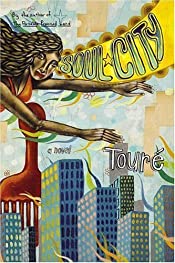
Soul City ~ A Book Review

Toure’s Soul City is a laugh-out-loud satire about black life and the conditions of the people. It goes from moments of hilarity to moments of silence deemed by heart-wrenching truths. Cadillac Jackson is a writer who comes to town to write about the city but is soon too caught up in its daily activities to write the first sentence.

Toure uses aptronyms where the people’s names match either their jobs or personal traits. He has characters such as Spreadlove, Ubiquity, Jiggaboo, Emperor Jones and a host of others as he goes through the spectrum of any town. From city government to the church or to the town’s favorite eatery (a buttered biscuit shop), Toure takes the reader on a thorough ride through Soul City with its fun, pathos and sobering history until the last drop is savored!

Spreadlove is known for his many women who have a blind allegiance to him regardless while the very poor live in Ragamuffin Projects which has been designed to let in minimal light. Loud music is piped through the community and when the speakers malfunction one day, the people are lost and terrified by the silence. They are at total loss and do not know what to do with themselves. Whereas, Jiggaboo has taken such a low role for profit that no amount of therapy can help his self-loathing.

Ubiquity is the town gossip whose entire goal is to garner a shock-effect from her victims, while poor Unicorn is exploited for his physical prowess and ends up taking his own life to put a halt to the pain. Some even voluntarily sign up for The Slave Experience where they live in chains, wear rags and are subjected to beatings for a year. They vow that they can take it for one year, if their ancestors endured it for a lifetime. And then, there is the Reparations check scam where the citizens get the $100,000 deposited into their checking accounts, only to see it constantly diminish in increments, though they had made no withdrawals.

Toure’s bold and unabashed look into the harsh realities of the black condition will cause the reader to laugh-out loud at times. In other moments, the starkness of certain situations may cause the reader to wipe away a slow tear. These caricatures and their daily antics give aha moments, shake-your-head moments and moments of sheer wordless silence.

Lynn M.
January 7, 2023

I Would Die 4 U- A Book Review

Toure takes an in-depth look into Prince’s music in his book, I Would Die 4 U. He matches Prince’s lyrics to many of his songs to actual events that were happening in the musical genius’ life. Prince had a work ethic like no other and could easily work up to forty hours straight until he had achieved the right sound and effects. Some said that he could not be separated from his music, and it ruled him. 

He would hear a sound and he knew that he had to get it down before it vanished, which some artists may understand. He played all the instruments on a piece and then merged them together to create his own music. He studied many of the great musicians and composers from Mozart to Coltrane and it has been said that he came up with his own genre. 

Prince felt driven and called by God to accomplish things and he felt that time was ticking through the hourglass, so he had a lot to get done before making his exit. His androgynous   appearance, his petiteness and his boldness in mixing both male and female clothing put everyone on notice. It has been said that he could outshoot the guys on the basketball court while wearing high heels. 

Prince was wrapped in a cover that pulled in the generation X–ers because they too were latchkey kids like Prince and had often been left alone for too many hours to delve into adult worlds. He baited in his audiences with outrageous sexual antics but underneath the façade, he was deeply spiritual. He strongly felt that he was here on borrowed time and felt that his main mission was to spread the Word and evangelize the masses. 

Toure discusses how he started his concerts with hot, sensual movements and then once he had the audience’s full attention, he slowed the tempo down and started giving subtle sermons. We recall lyrics such as, “Dearly beloved, we are gathered here today to get through this thing called life,” or he encouraged with lines like, “A feeling of self-worth will caress U.” He took risks and combined sexuality with spirituality and reminded his listeners that, “It’s always darkest before dawn.” He told one interviewer, “The whole point of the show was, I’m going to do the dirty half of me in the first half because that’s what you came to hear but in the second half, I’m gonna show you what it’s really supposed to be about.” 

Prince was keenly aware of his mortality and saw the afterlife as a world of never-ending happiness. Similar to many artists, his childhood was racked with pain but like the oyster’s agitations, the gods were creating a special pearl. Prince was gifted to the world in a small package, but he could sing both male and female parts in his lyrics, play all the instruments and most of all, he fascinated us all with his brilliance and mystique! 

Lynn M. 
December 31, 2022 

Three Girls from Bronzeville: A book review

When I saw a picture of Dawn Turner receiving the 2022 Pattis Foundation Chicago Book Award in the Newberry Magazine’s Fall/Winter 2022 edition, I took immediate notice. I looked up her book, Three Girls from Bronzeville: A Uniquely American Memoir of Race, Fate and Sisterhood and saw that it was available at our local library. I put on two jackets and warm clothing and walked to the Crown Library and thank goodness, it was there on the shelf.

I dived in and finished this page-turner in three days. Dawn Turner talked about the south side of Chicago and lived in places and spots that I have also frequented throughout my journey. She lived in Lawless Gardens where one of my sisters once lived. She went to Doolittle School which I drove by daily and spoke of Pershing School where I temporarily subbed. We both even attend Hyde Park High though I did so before her.

Her daily walks to Lake Meadows Shopping Center reminded me of when it was in its glory days and had stores such as Goldblatt’s and Woolworth’s. The nearby Alco Drugstore, which she also mentioned, was a place where many south siders traveled at all times of night because it stayed open 24 hours. We could purchase items like iodine, mercurochrome, BC or Goody powders, all virtually impossible to find these days.

For me, this was a deeply engaging tale as she remembered the off-limits Lake Meadows Complex where the black elite lived, a place I often visited to see a close friend. She too mentioned the elusive Prairie Shores Complex where I later resided for over a decade. Turner goes into detail about the early years of the three Bronzeville girls which include her, her younger sister Kim and her dear friend, Debra.

Quite typical of an observer who would go on to become a Chicago Tribune writer, Dawn was the silent onlooker as her sister Kim and friend Debra both took a walk on the wild side. They got caught up in the mean streets of Chicago and became dangling victims of its spewed venom. Every south sider from Chicago should pick up a copy of Three Girls from Bronzeville as they reminisce and see what happens to Dawn, Kim and Debra!

(Reviewed on Amazon and Goodreads) ***** 5 Stars

Lynn M.
December 10, 2022

Cycling through France!

Susie Kelly and her husband Terry cycle through the countryside of France in The Valley of Heaven and Hell: Cycling in the Shadow of Marie Antoinette. She is riding an electric bike while Terry pedals a regular one as they travel 500 miles in 17 days. Susie takes us on the ride with them as she sprinkles in tidbits of French history, battles, and new green spaces that now cover former tragedies. 

Initially, we see them start out in Versailles and cycle to Paris and stay at a hotel close to the Gare du Nord (train station).  Then, they set off and cycle halfway across France. She has studied the life of Marie Antoinette, so she consciously traces the steps of the lives of King Louis XVI and Queen Marie Antoinette. Through Susie Kelly’s descriptions, we can see her as a young Austrian child-bride used as a political pawn by her stern mother. Young Louis had a hard time accepting his married state but over time, they learn to love each other, mourn their lost children and nurture the remaining two children. The oldest daughter, Marie-Therese survives the Reign of Terror and tells the tale of what happened to her family, 

As Susie and Terry cycle through the various French towns, she humorously gives descriptions of the hotels, eateries, and the characters that they encounter along the way. There are several “laugh out loud” moments and she is even able laugh at herself when she thought she could not continue the feat. Once, she overhears an absurd conversation with a child who continually asks his parents why about six times. Amazingly, he received six full explanations and Susie just shook her head in the other room.  

They follow the plight of Louis XVI and Marie Antoinette from the prison at the Tuileries all way to the guillotine where Louis is beheaded long before Marie Antoinette. Her wait time continues as well as her suffering until her final moment finally comes. Again, Susie tells the tale with such lightness as she goes back and forth from their time in the late 1700’s to the present. She allows her readers to enjoy the beauty of the French towns, cathedrals and other pristine moments and takes us back to a more in-depth tour around into Paris. I am so happy that Val Poore recommended this book!  

Sainte- Chapelle of Paris

Lynn M.
September 24, 2022

Still Learning!

It is interesting how a visitor can come to your hometown and bring such new information!  It may not be unusual because the tourist has hit the books and knows exactly what he or she is  looking for; whereas, the locals trudge right pass unknown treasures everyday.

To that point, a friend and I stopped to ask several locals for the MLK Memorial in Atlanta and we were shocked when several hunched their shoulders as if to say, “I dunno.”  After a while, it became both comical and mostly tragic and we found the humor in it rather than burst into tears.  That was in the late 70’s.

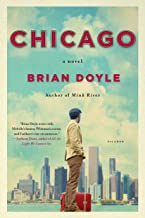
But, I digress.  This is about Brian Doyle’s book Chicago which I recently finished and relished. A lot of places were familiar but I had to admit that he gave me several lessons though this has been a home base for many moons.  Doyle came here for five seasons right after graduating from Notre Dame.  He wrote for a magazine and it was his task to find stories about everyday people.

Yes, I will ashamedly admit that Mr. Doyle had to tell me that Lincoln Park, which I have visited trillions of times was named for Abraham Lincoln. Maybe I knew it some point. I knew that the streets in the Loop are named for the US Presidents, but I guess the fact that the parks were named for them escaped me.

And that mighty Grant Park is named for Ulysses S. Grant and our beloved Jackson Park for Andrew Jackson.  I think I recently recall that Washington Park was named for George Washington because of the recent statue controversy.

In some aspects, I am just as guilty as those people were in Atlanta on that sunny day. In our busy, rapid lives, we rush right by these monuments as we hurry to catch a bus or wave down a taxi. We miss so much!

This book, Chicago, took me up and down so many traveled roads He added the love and cohesion of community, the importance of the generosity of spirit and the role of writers who help keep it real when people get lost in the shuffle. Doyle reminded us of the beauty of storytelling and how those stories keep us going as we remember past events.

And lastly, Brian Doyle talked about the name of Chicago which came from the Potawatomi  Native Americans.  Chicagouate or chicagoua was a form of garlic/onion which grew in abundance to where they say the river poured into the lake.  Further research revealed the Native Americans only traded with their kin.  Thus, Jean Point Baptist Dusable married a Potawatomi woman and was then able to participant in trading.  It has been written that she was ‘crucial to his success.’

Chicago recently renamed Lake Shore Drive to Jean Baptiste Point Dusable Lake Shore Drive. Yes, it is a mouth full, but it seeks to get the historical facts somewhat straight. What we do know is the trade industry gained traction from the point where the Chicago River empties into Lake Michigan. And the rest, as they say, is history.  Many thanks to Mr. Doyle who left us too soon, but whose words and good works shall remain.

Lynn M.
October 23, 2021

Rendered Speechless!

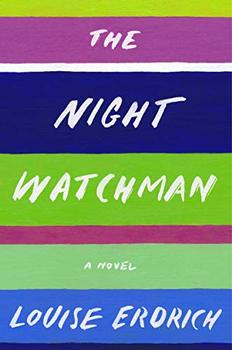
This is a spoiler alert! When I recently finished Louise Erdrich’s book The Night Watchman, I was rendered speechless by one of the subplots, not the main plot, of this engaging novel. One of the focal characters, Patrice (Pixie) is the breadwinner for her indigenous Chippewa family. 

She is the only one in the family who has a job, and she works at a jewel factory performing very delicate operations. Her father is broken from the many onslaughts of reservation life, and he has become an abusive alcoholic who is often gone away from the family. No one looks forward to his infrequent returns, especially their mother because of what they all must endure when he is at home.

Her older sister, Vera, has moved away to the Big City but is now considered to be missing and the family is deeply concerned about her. Pixie puts her job on the line as she borrows days from her co-workers to venture into the Big City to look for her sister. She is tricked at the train station and ends up in a would-be perilous situation herself. She temporarily works at a bar swimming in a fish-like tank with dyed water for the customers’ entertainment. 

One of their friends, a boxer named Wood Mountain, senses that she could be in danger, and he goes to the city to make sure that she is okay. No one will tell them where Vera is at that time, but they do end up bringing back Vera’s infant son after Pixie makes her get-away from  the bar.

The family embraces the baby and all cuddle and nurture him as Pixie returns to her regular job. She eventually begins to fall in love with Wood Mountain and finally gives into him as her first lover. Overtime, Vera surfaces and she has been detained against her will and trafficked on a ship. When she is used and nearly dead, they discard her on the side of a road in Duluth and fortunately a medic finds and helps her. 

Vera makes it back home, but she is damaged both physically and spiritually. They are happy to see her and she falls back into the embraces of the family. By, then, Wood Mountain is extremely attached to the child and often frequents the family home. And then, it happens. 

Pixie returns home from work one day and notices the rhythm between Vera and Wood Mountain as tries to say he loves them both. But Pixie, says, “No. It is not going to happen like that!”  Instead, she agrees to help fix up a small house on the property for Vera, Wood Mountain, and the baby Thomas Achilles.  

 I see Pixie going on to greater heights like on to college or choosing some new path for herself.  She has the strength of character to do so, but this part rendered me speechless. How much can one give? And how much can one accept from another’s labors? It reminded me of the movie The Valley of the Dolls, when Anne Welles (Barbara Parkins) walked away with a wrangled, wildly beating heart but definitely moving on! 

Lynn M. 
July 28, 2021 

The (Other) You: A Book Review

Joyce Carol Oates’ latest collection of short stories, The (Other) You is filled with ruminations about life’s journey. She ponders what life would be like if we had chosen other paths or made different choices. In fifteen short stories, she makes us think about our mortality as we look back over our years of living.

She has written stories that cause us to think deeply about the what-if’s as she takes us through snippets of her own journey as a literary writer. As she quibbles with a beloved spouse whose health is declining during a disappointing trip abroad, she has us thinking about the depth of enduring relationships. Yet, we are rudely awakened as we see that nothing lasts forever and she also notes how close friends and co-workers are aging and facing health challenges.

She visits her childhood home after many years and sees and hears about what happened to some her former classmates. Though she holds onto precious memories, the present conditions there do not mirror her past recollections. There are only fractures of what she experienced strewn here and there, once again reminding her that life is ever-moving and nothing stays the same.

In one story, a character wonders why her loved ones cannot see her, only to realize that she is no longer alive and they are mourning her accidental demise. Or, in other instances she experiments with speaking from several characters’ points of view though they are all involved in the same scenario.

Oates takes many risks, as she writes in a variety of genres and a couple of her stories even border on horror. She makes the valid point that we unconsciously dismiss the importance of others due to our own stereotypical beliefs. She labeled her writing best when she called it speculative fiction. She certainly makes us appreciate the gifts of our current paths which shaped us into who we are today because other choices would have molded us into becoming someone else!

Lynn M.

April 10, 2021